

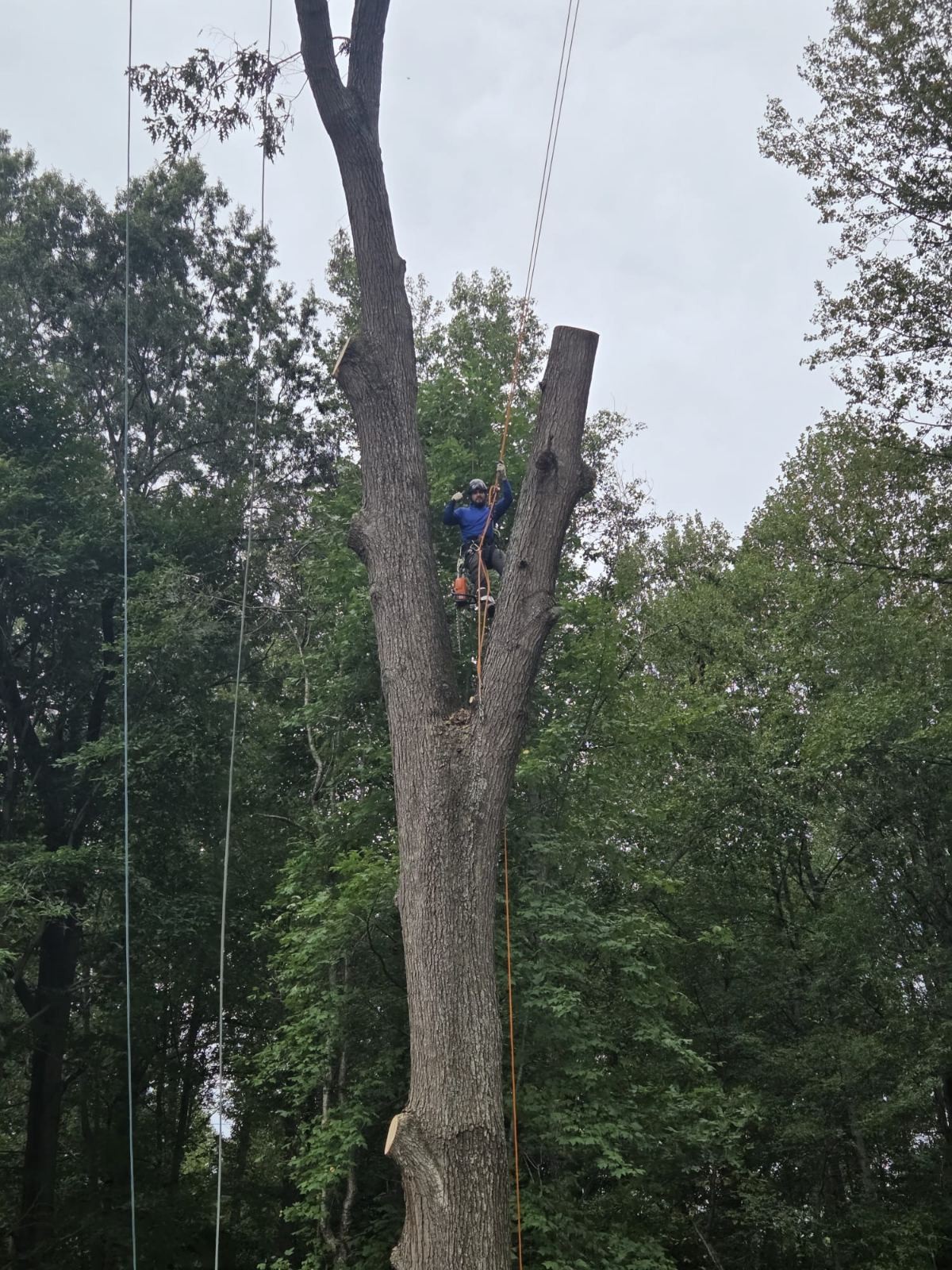
Prioritize multiple tree removal requests by documenting each tree separately, noting visible concerns and what could be affected, then asking a provider to assess the trees and explain which items need attention first. Do not treat your ranking as a professional diagnosis: it is a way to communicate concerns and goals. If a tree appears to pose an immediate danger, keep people away from the area and contact a qualified tree professional or appropriate local service for guidance. For other requests, compare the potential impact of waiting, your plans for the space, and any access or property constraints.
Start with observable concerns
Make a separate entry for every tree you want considered. Give each one a simple label, such as “Tree A by the back fence,” and take a photo from a place where you can observe it without approaching a concerning area. Record what you actually notice: a dead-looking section, storm damage, a branch near a structure, or interference with a planned use of the yard. Avoid diagnosing disease or predicting failure from a photograph. Those are questions for a professional assessment.
Describe the possible consequence of waiting in practical terms. Could the concern affect a frequently used entrance, a building, a neighboring area, or a future yard project? Is the issue mainly appearance, shade, or space? These details help distinguish a concern that may need prompt review from a preference that can be planned alongside other work. They do not establish a risk level by themselves, and a provider may need to see the site to understand the tree and its surroundings.
- Tree label and approximate location
- Visible condition or change, without a diagnosis
- Nearby features or areas that matter to you
- Your reason for requesting removal or assessment
Describe what you see and why it matters; leave the assessment to a professional.
Rank by impact, not by appearance alone
A useful first pass is to sort requests into three working groups: concerns that warrant prompt professional review, planned work that affects how you use the property, and lower-priority preferences. This is an organizing tool, not a safety rating. If you are unsure where a tree belongs, mark it “needs assessment” rather than forcing a ranking. A tree that looks less noticeable may still deserve discussion if its location or condition raises a concern.
Next, consider what changes if each request is delayed. A tree near a regularly used area may affect daily routines; a tree connected to a planned landscape change may affect the order of other work; a tree requested mainly for appearance may allow more flexibility. Include uncertainty openly. For example, write “large limb appears damaged after a storm; please assess” rather than “tree is about to fall.” This keeps the list useful without presenting an unverified conclusion as fact.
| Request type | What to record | What to ask |
|---|---|---|
| Concern needing review | Visible change and nearby area | Does this need prompt assessment? |
| Planned property work | Project goal and desired sequence | How might timing affect the plan? |
| Preference or space goal | What you hope to change | Is removal the appropriate scope? |
Make the scope clear for every tree
A priority list should make it easy to tell which tree each request concerns and what you are asking the provider to consider. Mark locations on a simple property sketch or use consistent labels in your notes and photos. If two trees are close together, describe a stable landmark and show the relationship between them. Do not assume that a provider will know which tree you mean from a general description such as “the one near the yard.”
For each entry, state whether you are requesting an assessment, asking about removal, or trying to understand whether another service may fit. Tree removal is not automatically the right answer for every concern; the provider can discuss the scope after reviewing the situation. If you want to keep nearby trees or protect a particular area, say so before discussing the work plan. Allison Tree Services describes its tree removal service as including removal and debris cleanup; confirm the specific scope for your property rather than assuming what is included.
- Label each tree consistently in notes, photos, and any sketch.
- State the concern and the outcome you want for that tree.
- Identify nearby structures, access limits, or trees you want to retain.
- Ask the provider to clarify assessment, proposed work, and cleanup.
Prepare for the conversation and revise your order
Share the list in priority order, but explain that the order reflects your current concerns rather than a professional determination. Ask the provider to review the trees and tell you whether the proposed sequence should change. Useful questions include: Which items need an on-site assessment? What factors affect the order of work? Are any requests better handled as a different service? What cleanup is included, and what should be moved or kept clear? Answers may depend on the tree, site conditions, access, and the work being considered.
Check whether any tree is near a public road or within a public road right-of-way. Tree work in that area may involve a separate permit process in Maryland, so ask who should confirm whether it applies before work is planned. Do not assume that a private-property request and roadside work follow the same process. If ownership or the exact boundary is uncertain, pause that item and clarify the location and permissions before treating it as ready to schedule.
A simple illustrative example: a homeowner lists one tree with storm-related visible damage near a frequently used area, another that conflicts with a future planting plan, and a third they would prefer to remove for appearance. They mark the first for prompt professional review, note the planting goal for the second, and place the preference last. The provider’s assessment may change the order; the example shows how to communicate priorities, not how to diagnose a tree.
- Have I described observations rather than made a diagnosis?
- Can the provider identify each tree from my labels and photos?
- Have I explained what matters most and what can wait?
- Have I asked about scope, sequence, access, and cleanup?
- Could a public road right-of-way or unclear boundary affect the request?
Use your list to start a clear conversation, then revise it based on the provider’s assessment and the confirmed scope.
Common questions
Should I schedule the tree that worries me most first?
Put it at the top of your list and explain what you observed, where the tree is, and what area could be affected. Your ranking communicates concern; it does not confirm the tree’s condition or urgency. Ask a tree professional whether it needs prompt assessment and what next steps are appropriate. If you believe there is immediate danger, keep people away from the area and contact a qualified professional or appropriate local service for guidance.
What if I am unsure whether a tree needs removal?
Label the request as an assessment rather than deciding in advance that removal is necessary. Describe the visible issue and your goal, then ask the provider to explain the options and proposed scope after reviewing the tree and site. Depending on the situation, removal may not be the only service to discuss. Avoid making a diagnosis from appearance alone, and ask what information or on-site review is needed to clarify the recommendation.