
Choose tree removal when a standing tree needs to come down; choose stump grinding when a tree has already been removed and you want to address the remaining stump. If your plan involves a standing tree and the stump afterward, ask whether both services should be included in the proposed scope. The choice depends on the tree’s current condition and your intended use of the space, so describe both when requesting an assessment.
Start with what is still in the yard
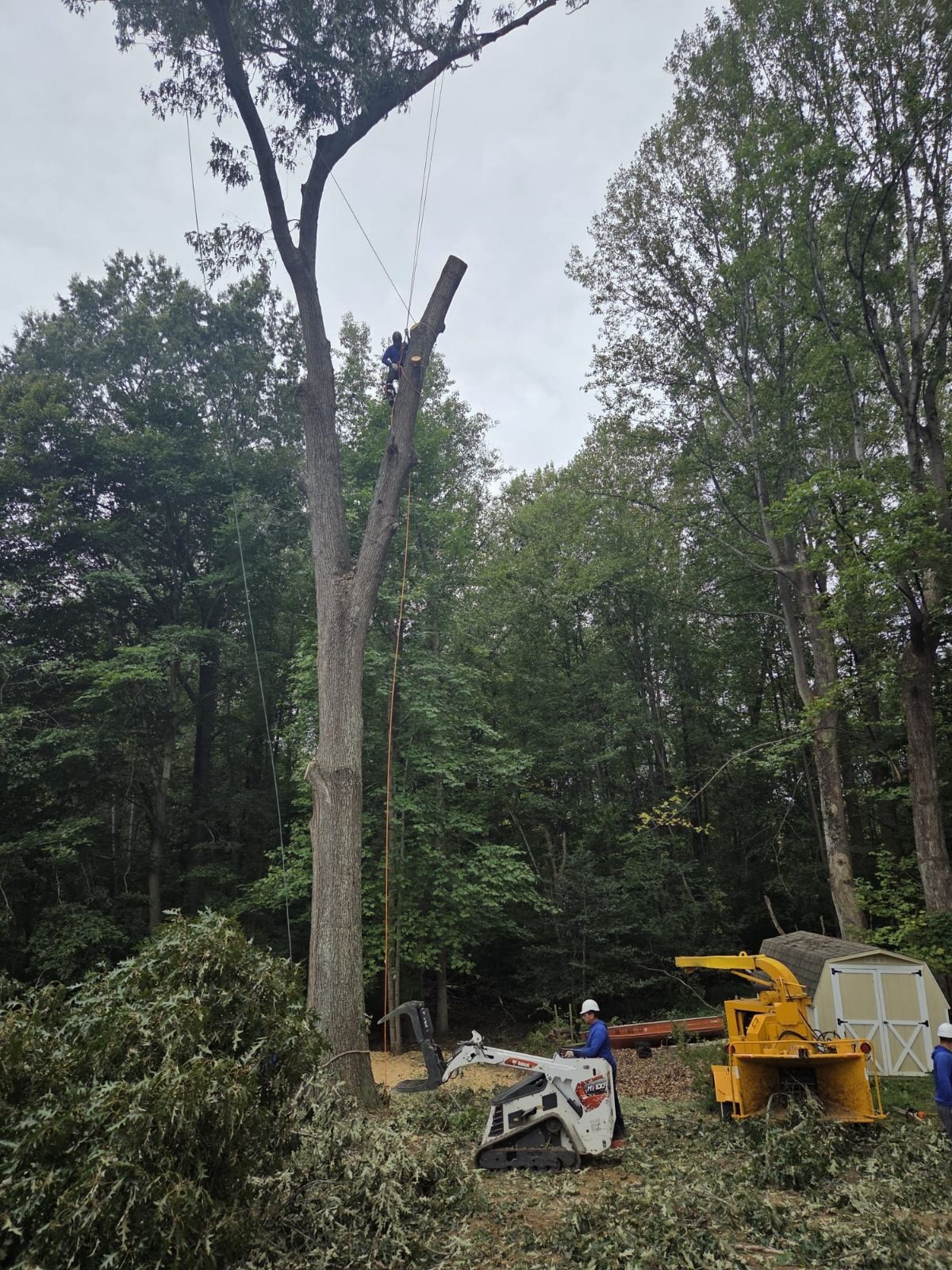
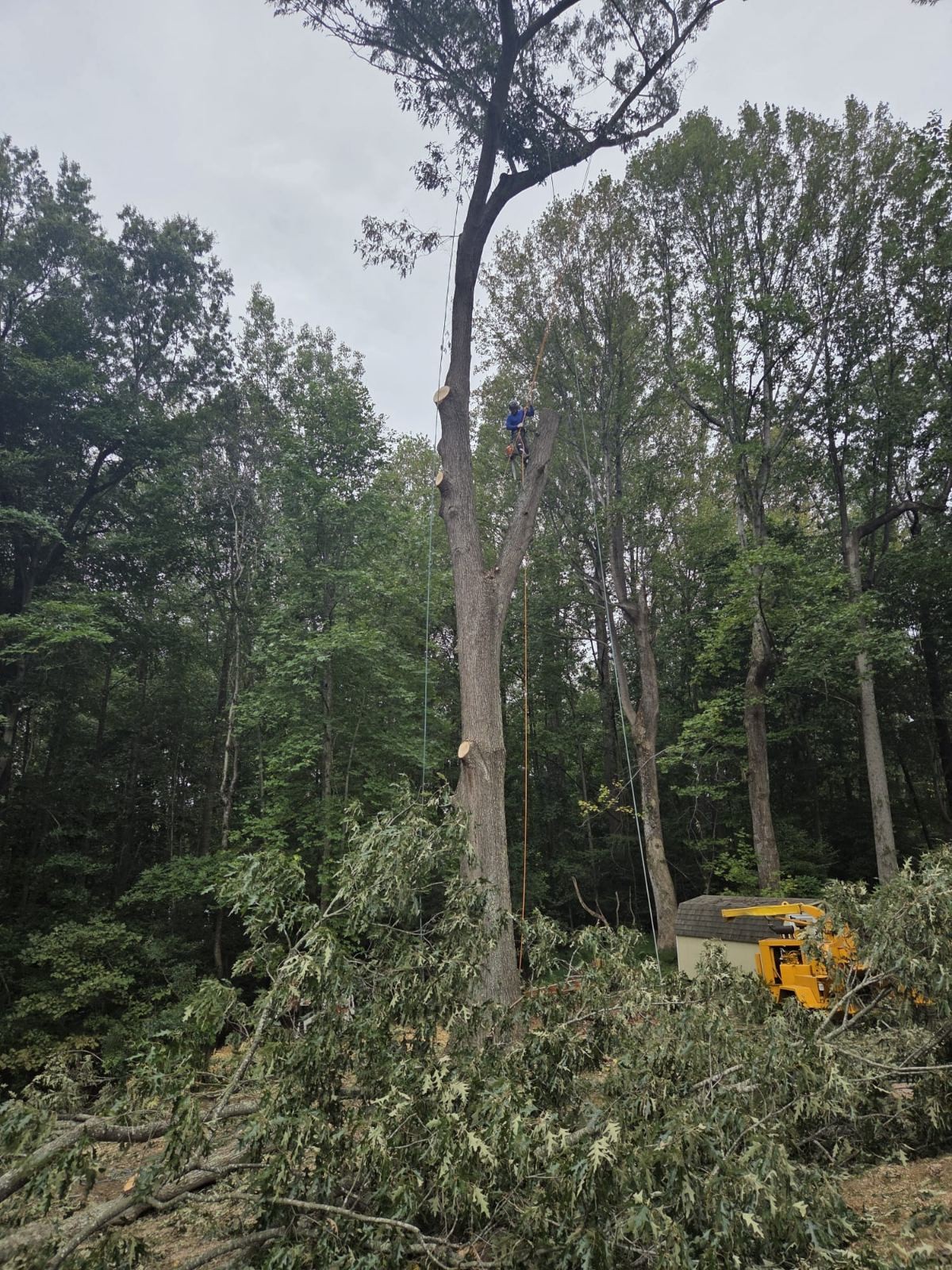
The simplest distinction is whether the tree is still standing. Tree removal addresses the standing tree. Stump grinding addresses a stump left after a tree has been cut down. They are related services, but they are not interchangeable: grinding a stump does not take down a standing tree, and removing a tree does not, by itself, tell you whether stump grinding is included in the work.
Begin by identifying what you can see, without trying to inspect or alter the tree yourself. Is there a standing trunk, a cut stump, or both? If the tree is standing, explain why you are considering removal and what you hope to change in the yard. If only a stump remains, describe its location and what you want to use that area for. A professional assessment can help clarify the appropriate scope; a brief description alone cannot establish the tree’s condition or what work is suitable.
Match the service to the plan
Think about the intended use of the space rather than choosing a service based only on the word “tree.” For example, if a standing tree is in the way of a planned yard change, tree removal may be the service to discuss first. If the tree is already gone and the remaining stump is the obstacle, ask about stump grinding. If the tree is standing and your plan also calls for addressing the stump that would remain, ask whether removal and grinding can be considered together.
These are planning examples, not a prediction of what a particular property needs. The tree’s location, nearby structures, access, and the condition of the site can affect the assessment and proposed work. A yard plan can also change: a space intended for lawn may have different needs from one intended for planting or another project. Share the intended use, but ask the provider to explain what the proposed service covers and what it does not.
| Your situation | Service to discuss | Clarify before scheduling |
|---|---|---|
| A tree is still standing | Tree removal | What removal includes and how the site will be left |
| The tree is already down or cut, with a stump remaining | Stump grinding | What happens to the stump and resulting material |
| A standing tree needs removal and you also want the stump addressed | Ask about both services | Whether each task is included in the written scope |
Clarify the scope and the limits
Service names are a starting point, not a complete work description. Before agreeing to a plan, ask the provider to state whether the proposed work is tree removal, stump grinding, or both. Ask what happens to branches and other debris, whether stump-related material is included, and what cleanup is part of the scope. Do not assume that one service automatically includes the other or that cleanup means every part of the site will be restored for a new use.
If you are comparing proposals, look for the same distinctions in each written description. A proposal that names tree removal may not address a stump, while a stump-grinding description may not cover removal of a standing tree. Ask for unclear terms to be explained in writing, including any limits on cleanup or work around the area. Allison Tree Services offers tree removal in Maryland; the service page describes that offering, but the specific scope for your property should be confirmed with the provider.
Prepare a useful request
When you contact a provider, describe whether the tree is standing or already cut, where the stump is if one remains, and what you want to do with the space. Mention nearby features that may matter to the assessment, such as a structure, planting area, or narrow route to the work area. These details help frame the conversation; they do not replace an on-site evaluation when one is needed.
Ask for the proposed service and cleanup to be described clearly, and confirm whether stump grinding is included or would be a separate part of the work. If you are unsure which service fits, say so directly and explain your yard plan. A provider can then assess the conditions and discuss options. The appropriate choice and scope can vary by property, so use the discussion to resolve uncertainties rather than assuming that a general example applies to your yard.
- Identify whether a tree is standing, already cut, or represented only by a remaining stump.
- Explain the intended use of the space and note nearby features relevant to the assessment.
- Ask which service is proposed, what cleanup is included, and whether stump grinding is part of the written scope.
Decide from the current condition first: a standing tree points to a tree-removal discussion, while a remaining stump points to a stump-grinding discussion. If your plans involve both, ask for both tasks to be addressed explicitly.
Common questions
Does tree removal automatically include stump grinding?
Do not assume that it does. The services address different parts of the job, so ask the provider to specify whether stump grinding is included, offered separately, or outside the proposed scope. Request a clear written description of what will be done and what cleanup is included. The answer depends on the proposal for your property, not just the general service name.
What should I ask if I only have a stump?
Explain that the tree is already cut and describe where the stump is and how you hope to use the space. Ask whether stump grinding fits the situation, what the work includes, and how the resulting material and cleanup will be handled. If the area is part of a larger yard project, mention that plan so the provider can discuss the scope in context. The assessment may vary with site conditions.