
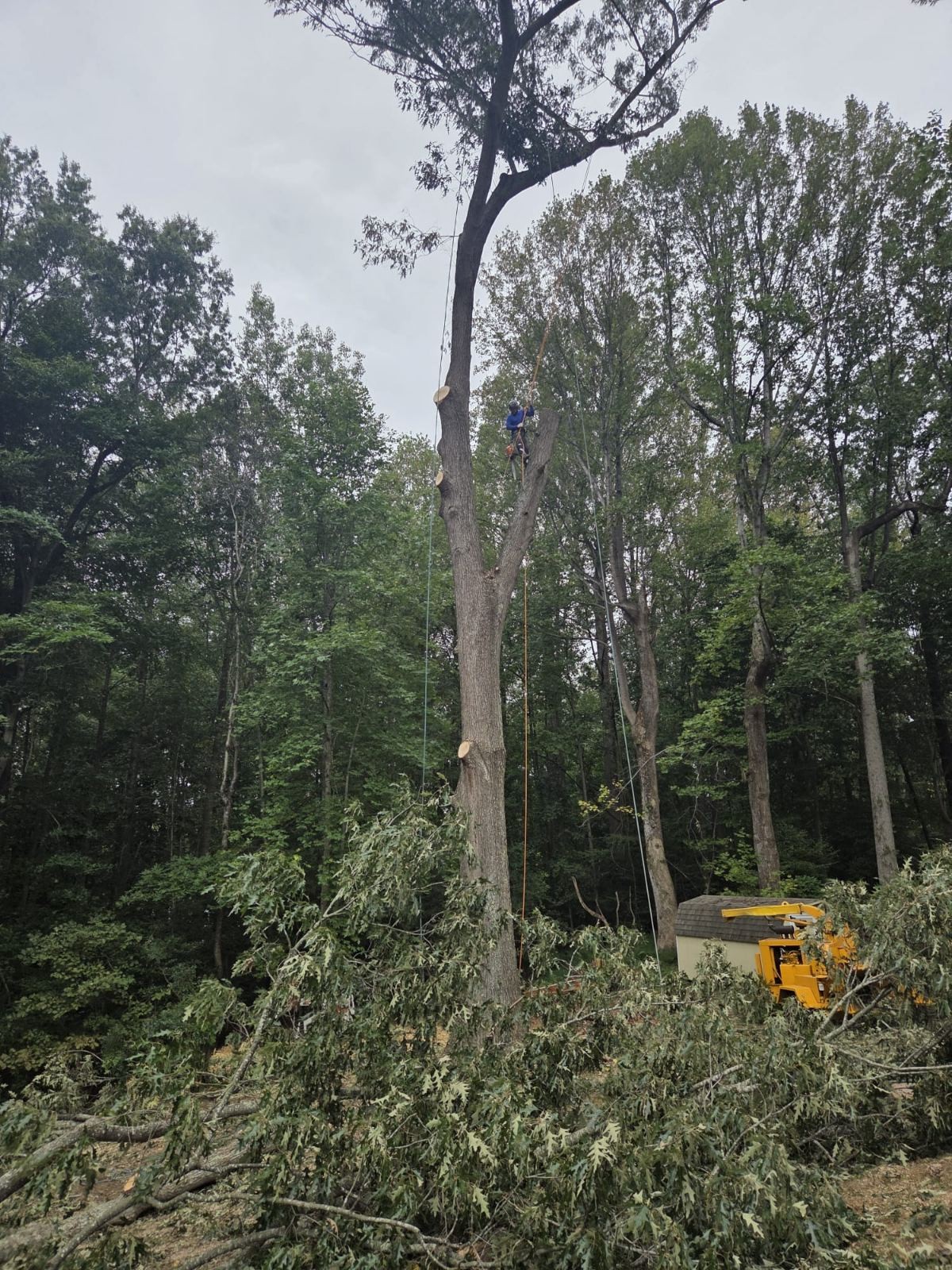
For tree removal in a narrow work area, clarify how the crew can reach the site, what nearby features need protection, how the work area will be managed, and what cleanup is included. Share clear photos and ask the provider to explain which details could change the plan. A narrow site does not point to one standard method; the tree, surrounding space, and conditions all matter.
Start with the available work space
Describe the route from the street or driveway to the tree, not just the tree’s location. Note gates, turns, steps, slopes, soft ground, overhead branches, and places where access narrows. If a vehicle or equipment cannot pass through, say so rather than assuming the provider will infer it from a photo. A simple sketch can show the route and the tightest points.
Then distinguish access for people from access for equipment and for moving cut material out. A path may be walkable but too narrow for a machine, or it may be blocked by a fence, parked vehicle, garden bed, or other feature. Ask what access information the provider needs to assess the site and whether they need to see the area in person before discussing a plan. The answer depends on the actual tree and property.
- Measure or estimate clear openings only if you can do so easily; label estimates as approximate.
- Photograph the route from more than one angle, including the narrowest point.
- Mention surfaces or landscaping that you want the crew to avoid where practical.
Useful access information describes the whole route and its constraints, not only the tree.
Compare obstacles and protection needs
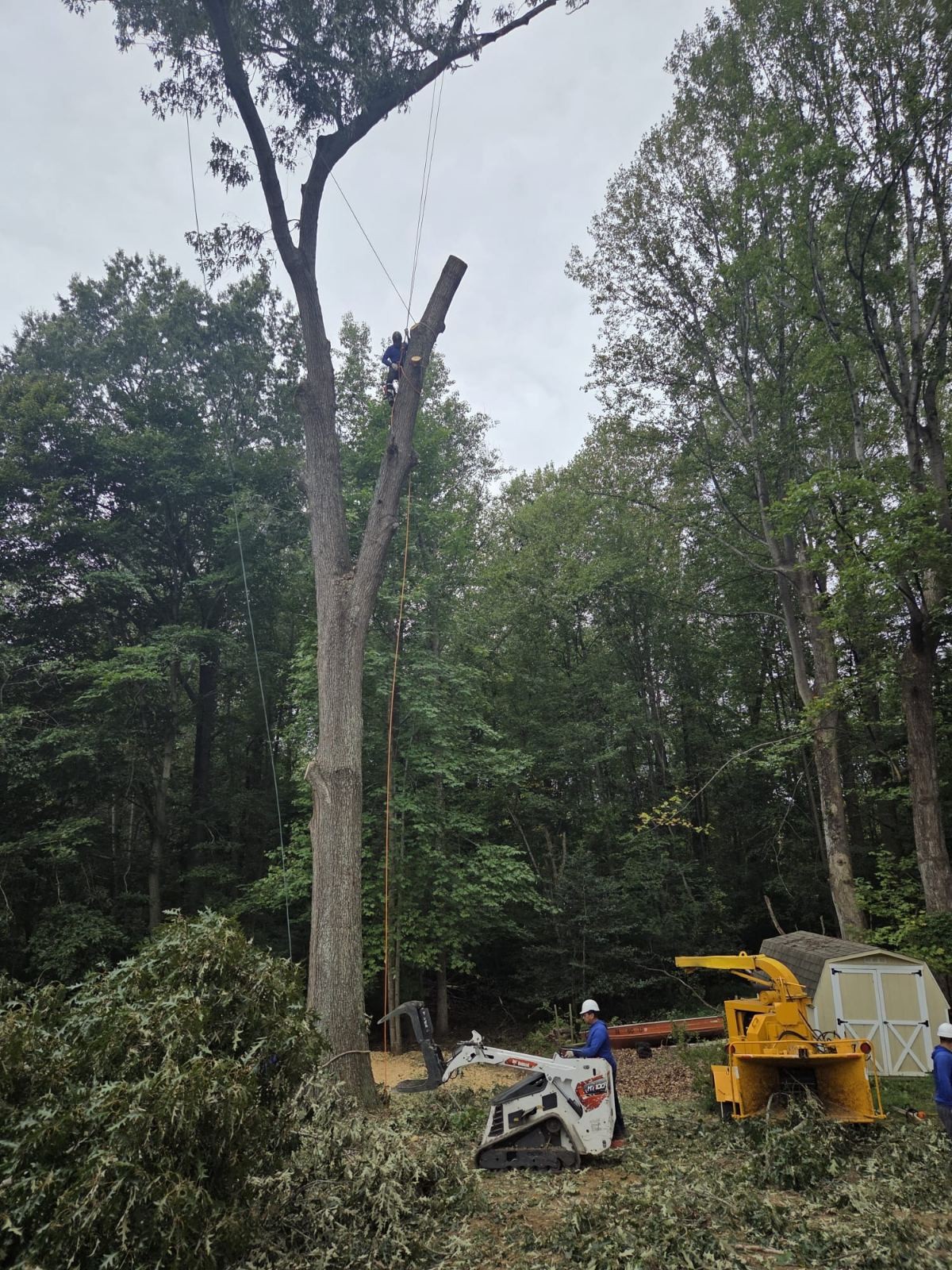
A confined area can place a tree close to a house, fence, shed, garden, neighboring tree, or overhead feature. Identify what is nearby and what you want the provider to consider protecting. Photos can help show relative positions, but they do not establish exact distances or reveal every condition. If a feature is hidden from the camera angle, describe it separately.
Ask how the provider will assess the tree and the surrounding work area, and how they will explain the proposed work boundaries. The plan may depend on the tree’s shape and condition, the available space, and nearby property. Do not assume that a particular piece of equipment or removal approach will fit simply because it appears compact. The provider needs to assess the site and explain the options that apply there.
For example, imagine a tree beside a shed with a narrow path between the shed and a fence. This is an illustrative situation, not a documented customer project. A useful discussion would identify the shed, fence, path, and any plants to retain, then ask what access and protection considerations affect the proposed work. It would not assume a specific machine, technique, or outcome.
- Point out structures, fences, plants, and trees near the work area.
- Say which items you want left in place or protected, without assuming protection is possible in every circumstance.
- Ask what site conditions could require a revised plan or schedule.
Clarify how the work area will be managed
Ask the provider to describe the work area in plain language: where the crew expects to work, what parts of the property may be affected, and whether access needs to remain clear. This is especially useful when the narrow space connects to a shared route, a frequently used entrance, or an area where people or pets may be present. Agree on how you will receive any changes to the plan.
Keep the discussion focused on observations and decisions you can make as the property owner. You can identify access constraints, point out nearby features, and ask how the provider will communicate the work area. Leave decisions about removal methods and work practices to the qualified crew assessing the site. If the tree is near electrical conductors, mention that clearly and ask the provider how that affects the assessment; do not approach or handle wires.
A written description can reduce misunderstandings: identify the tree, the route, the features to consider, and the areas you expect to remain accessible. Ask the provider to confirm what is included in the proposed scope and what assumptions it relies on. If the site changes before the scheduled work, such as a new obstruction or altered access, tell the provider before work begins.
Agree on the work boundaries and communication plan before treating the schedule as settled.
Set cleanup expectations before scheduling
Cleanup can matter more in a tight area because branches and other debris may have limited routes out. Ask what debris handling and cleanup are included in the proposed scope, which areas will be cleared, and whether anything will remain on site. Do not rely on a general phrase such as “clean up” if you have a specific expectation about a path, lawn, garden, or other part of the property.
Also ask whether the access route needs to stay open during the work and how the provider will handle a change if the route becomes unavailable. The answer may depend on the site and the agreed scope. If you are comparing proposals, compare the stated cleanup and access assumptions as well as the removal work; different descriptions may not cover the same tasks.
Before scheduling, send the provider your photos, a short written description, and the questions that remain unresolved. Ask for the proposed scope, cleanup details, and any site conditions that could affect the plan to be explained clearly. Allison Tree Services offers tree removal in Maryland; you can review its tree removal service and discuss whether the service fits the conditions at your property. Plans and outcomes vary with the site and the information available.
- Access route and narrowest point described.
- Nearby structures, landscaping, and other obstacles identified.
- Work boundaries and communication expectations discussed.
- Cleanup scope and any remaining debris clarified.
- Changes in access or site conditions reported before work.
Schedule after the access, protection, scope, and cleanup questions are clear enough to discuss the proposed plan.
Common questions
What photos are most useful for a narrow site?
Send a wide view showing the tree and nearby features, plus views along the access route and its narrowest point. Include the structures, fences, landscaping, or other obstacles you want the provider to consider. Add a short note for anything hidden from view. Photos support an initial discussion, but they cannot confirm every site condition or replace an assessment when one is needed.
What if the access route changes before the work?
Tell the provider before the scheduled work and describe what changed, such as a blocked gate or a vehicle that cannot be moved. Ask whether the change affects the proposed access, scope, or timing. Do not assume the original plan still applies when a key condition has changed; the provider may need to reassess the situation and explain next steps.