
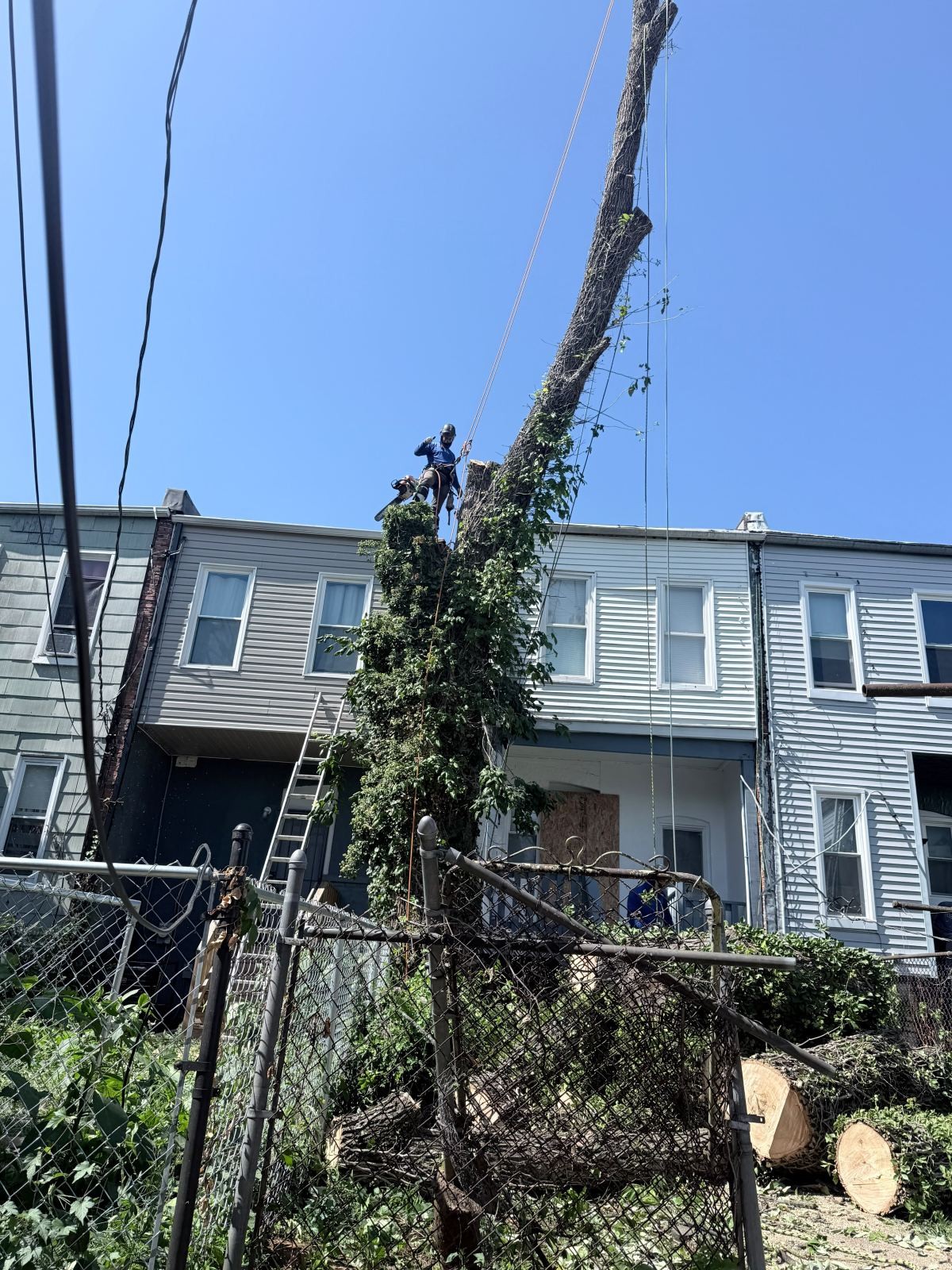
If a tree slated for removal is close to trees you want to keep, identify those trees during the estimate and ask how the work plan will account for them. Explain which trees matter to you, point out visible roots and tight access, and clarify how branches, trunk sections, and equipment will be handled. Nearby trees can still be affected by disturbance even when they are not the removal target, so discuss limits and uncertainties before scheduling. The right approach depends on the site and the condition of the trees; an on-site assessment can help define what is practical.
Identify the trees and your priorities
Start by making the distinction clear: which tree is proposed for removal, and which nearby trees do you hope to retain? If several trunks are close together, do not rely on descriptions such as “the one by the fence.” Walk the property with the estimator if possible, point out each tree, and explain any particular concern, such as a valued shade tree, a narrow planting bed, or a branch canopy that overlaps the removal tree. These details help frame the conversation; they do not establish that a neighboring tree can be protected from every effect of the work.
Describe what you can observe without trying to diagnose tree health. Mention exposed roots, low branches, leaning stems, damaged bark, or recent digging near the trees, if present. Also note features that could constrain movement, including a fence, garden, walkway, shed, or overhead obstruction. A photo can help show the relationship between trunks and nearby features, but it cannot replace an in-person assessment of access, tree condition, or the work area. For more on the service itself, see the tree removal service details.
- Name the removal tree and the trees you want to retain.
- Point out visible roots, branches, structures, and narrow spaces.
- Explain which outcomes matter most to you, such as keeping a particular tree or limiting disturbance to a garden.
Make your priorities visible before discussing methods or scheduling.
Ask how the work could affect nearby trees
A removal plan involves more than the trunk that will come down. Branches may overlap, and the work area may be close to the roots, stems, or canopy of trees that remain. Digging, repeated traffic, or moving equipment through a confined area can disturb soil and roots. The extent of any effect depends on the particular site and work method; visual distance alone does not tell you exactly where roots extend or how a neighboring tree will respond.
Ask the provider to describe the proposed sequence in plain language: how the removal tree will be handled, where material will be moved, and which areas may need access. Then ask what parts of the plan could affect the trees you want to keep and what limits apply. A useful answer should distinguish what can be planned from what cannot be known in advance. Avoid treating a general statement about care as a promise that no roots, branches, or soil will be disturbed.
- Which areas near the retained trees may be entered or disturbed?
- How will branches or trunk sections be managed where canopies overlap?
- What site conditions could change the plan once work begins?
Ask about likely disturbance and uncertainty, not only the removal method.
Clarify access, protection, and cleanup
The route used to reach a tree can matter as much as the cutting area. Point out gates, narrow passages, soft ground, planting beds, and surfaces you want the provider to notice. Ask whether the planned access route passes near the trees you hope to retain and whether another route is practical. The available equipment and the layout of the property may limit alternatives, so discuss the trade-offs rather than assuming a particular route can be avoided.
Be specific about what you mean by protecting a neighboring tree. You might be asking about avoiding contact with its trunk, keeping equipment away from a planting bed, or limiting disturbance around visible roots. Those are different concerns and may not all be achievable on a given site. Also clarify where branches and trunk sections will be handled and what cleanup is included. If the scope or access changes after the estimate, ask how the revised plan will be discussed before work proceeds.
- Identify the preferred access route and any areas of concern.
- Ask which protections are feasible and what they do not cover.
- Confirm how material will be moved and what cleanup is included.
Turn a general request to protect nearby trees into specific, discussable priorities.
Check site constraints and agree on next steps
Some properties have requirements beyond the immediate work area. If a tree is near a public road, shared boundary, or regulated shoreline area, ownership or local review may affect what can be done and who must be consulted. Do not assume that a tree’s position on your side of a fence settles ownership or permission. Ask the relevant local office or property owner what applies to the exact location and scope, and share any information you receive with the provider before setting a work date.
Before scheduling, review the written scope and make sure it identifies the removal tree, the intended access area, the material handling and cleanup discussed, and any stated limits around neighboring trees. If something important is missing, ask for clarification in writing. Allison Tree Services provides tree removal in Maryland; you can use the service page to review the offering or contact the business to discuss the property and request an estimate. Conditions vary by site, so the final plan should reflect what can be assessed there.
- Walk the area and identify the removal tree and the trees you hope to retain.
- Describe visible constraints and ask how access, handling, and cleanup are planned.
- Check whether ownership or local review may apply to the specific tree and location.
- Review the written scope and resolve open questions before scheduling.
Schedule only after the target, access, scope, and unresolved constraints are clear.
Common questions
Can nearby trees be protected during removal?
A plan can account for nearby trees by identifying them, discussing access and handling, and clarifying feasible limits. The level of protection depends on the site, tree condition, and work method. Roots may extend beyond what is visible, and conditions can change what is practical. Ask the provider to explain the likely disturbance and any uncertainty for your property rather than assuming that a neighboring tree can be kept entirely unaffected.
What if the tree is near a boundary or shoreline?
Pause to confirm who owns the tree and whether local review or permission applies to its location and the proposed work. Requirements can vary with the site and scope, so general guidance cannot determine what applies to a particular property. Ask the relevant local office or owner for direction, then share that information with the tree removal provider before scheduling. Do not treat a private estimate as confirmation that any separate approval has been obtained.