

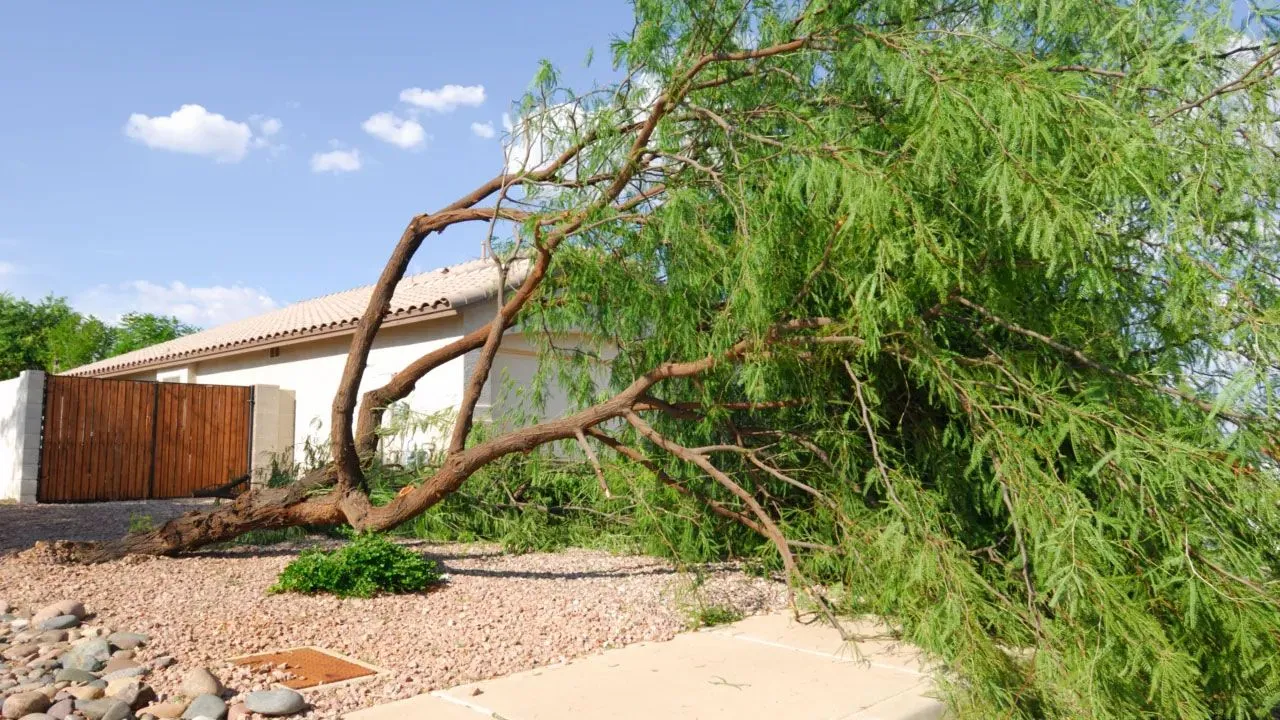
When a tree falls on your property, your mind goes everywhere at once. You hear the impact, see the damage, and start thinking about your roof, your car, your fence, your family, and what could happen next.
That moment can feel overwhelming, especially after a storm.
For homeowners in Gwynn Oak and the Baltimore area, fallen trees are a real concern after heavy rain, high winds, and saturated ground. A tree can come down across a driveway, split onto a house, crush a fence, or leave broken limbs hanging overhead. In every one of those situations, the right first move is not cleanup. It is safety.
This guide covers the first five steps to take after a tree falls, what to avoid, how emergency tree removal usually works, and what homeowners should know before the next storm hits.
According to NOAA’s National Severe Storms Laboratory, a thunderstorm is classified as severe when it produces wind gusts of 58 mph or higher, hail 1 inch or larger, or a tornado. Wind at that level is strong enough to snap limbs, uproot weakened trees, and cause serious property damage. Source: https://www.nssl.noaa.gov/education/svrwx101/thunderstorms/
Step 1: Make Sure Everyone Is Safe
This is the first priority every time.
If a tree has fallen on your property, keep people away from the area right away. Do not let anyone walk up to inspect the damage. Do not let kids or pets outside. Do not stand under broken branches or near a leaning trunk.
A fallen tree is often unstable even after it hits the ground. Limbs can still shift. Branches can break free. A partially fallen tree may still be under heavy tension, and that pressure can release without warning.
What to do immediately
- Move everyone to a safe location
- Keep children and pets indoors
- Stay away from the trunk, root ball, and broken limbs
- Avoid standing near the roofline if the tree hit the house
- Watch for hanging branches caught in other trees
If anyone is injured, call 911 right away.
Step 2: Stay Away from Power Lines and Other Major Hazards
If the tree touched a power line, pulled down a service line, or landed anywhere near electrical equipment, stay back. Do not try to move limbs. Do not touch the tree. Do not go near puddles or wet ground around the area.
A tree touching a power line creates a serious hazard. Electricity can travel through the tree, nearby branches, fencing, and even the ground around it.
Call for emergency help first if you notice any of these
- Downed power lines
- Sparking wires
- A burning smell
- Smoke near the tree or structure
- A tree pushing into the side of the house
- A collapsed roof section
- A gas smell or damaged utility equipment
If power lines are involved, contact the utility company first. If the scene is dangerous or someone may be hurt, call 911.
This step matters because emergency tree removal does not begin until the site is safe enough for a crew to work.
Step 3: Document the Damage From a Safe Distance
Once everyone is safe and the immediate danger is under control, document the damage. This helps with insurance, helps establish what happened, and gives the tree company a better sense of the situation before they arrive.
Take photos and video only from a safe distance. There is no reason to walk under broken limbs or climb on the roof for a better angle. Use your phone from the driveway, sidewalk, or another stable location.
What to photograph
- The full tree and where it fell
- Any visible damage to the house, roof, car, fence, or driveway
- Broken branches on the ground
- The root area if the tree uprooted
- Any blocked access points
- Wide shots that show the full scene
Helpful notes to save
| Item to Record | Why It Helps |
|---|---|
| Date and time of the incident | Useful for insurance and service records |
| Cause of damage, if known | Helpful after storms or wind events |
| What the tree hit | Clarifies the extent of property damage |
| Photos from multiple angles | Supports insurance documentation |
| Utility involvement | Important for safety and claim details |
Good documentation can make the next steps much smoother.
Step 4: Contact Your Insurance Company if a Structure Was Damaged
If the tree hit your home, garage, shed, fence, or another insured structure, contact your insurance carrier as soon as you can. They will usually want the basic details of what happened, along with photos and a description of the damage.
You do not need a complete cleanup plan before making the call. Start the claim process early and keep records of everything moving forward.
Be ready to share
- The date and approximate time the tree fell
- What the tree damaged
- Photos of the affected area
- Any emergency steps already taken
- Contact information for the tree service company
Some emergency tree companies provide written estimates, invoices, and job documentation that homeowners can use during the insurance process. That paperwork can be useful, especially if the work involved urgent hazard removal from a roof, driveway, or vehicle.
Step 5: Call a Professional for Emergency Tree Removal
Once people are safe, utilities are addressed, and the damage is documented, it is time to call a professional tree service.
This is where emergency tree removal becomes essential. Fallen trees are heavy, unpredictable, and dangerous to cut without the right equipment and experience. A tree that looks still may have sections under pressure. One wrong cut can roll a trunk, shift a limb into the house, or send debris in the wrong direction.
Situations that usually require emergency tree removal
- The tree fell on a house or garage
- The driveway is blocked
- A tree hit a car or fence
- Large broken limbs are hanging overhead
- The trunk split and the tree is unstable
- The root ball lifted and the tree is leaning
- The tree is tangled with another tree
- Storm damage left the area unsafe
For homeowners in Gwynn Oak and Baltimore, this is the point where calling Allison Tree & Landscaping makes sense. A professional crew can assess the hazard, control the work area, and remove the tree in a safe sequence.
What a Tree Crew Usually Does When They Arrive
Homeowners often think the first step is cutting. It usually is not. A good emergency tree crew starts with an assessment.
They look at the tree, the way it fell, what it is resting on, whether power lines are involved, and how much tension is stored in the wood. Then they plan the removal.
Typical first steps on an emergency tree job
- Inspect the site for active hazards
- Identify line, roof, and access risks
- Set up a safe work zone
- Decide the safest cut order
- Use the right tools for controlled removal
- Remove the tree in sections if needed
- Clear the debris and make the area safe again
That process protects the property and reduces the chance of more damage during removal.
Why You Should Not Try to Remove a Fallen Tree Yourself
This is one of the biggest mistakes homeowners make after a storm.
It is tempting to grab a chainsaw and start cutting. It feels faster. It feels practical. It is also where people get hurt.
A fallen tree can have twisted limbs, compressed branches, unstable trunk sections, and hidden movement. If the tree landed on a house or vehicle, the weight may be distributed in a way that is not obvious from the ground.
Common DIY risks
- Chainsaw injuries
- Falling limbs
- Electrocution
- Roof falls
- Crushed hands or feet
- Further damage to the house, fence, or car
- Insurance complications
Emergency tree removal is specialized work. The risk is real, and the job should be handled by trained professionals.
What Equipment Is Usually Needed for Emergency Tree Removal?
The tools depend on the situation. Some jobs only need cutting and hauling. Others require rigging, aerial access, or heavy equipment.
Common equipment used on emergency tree jobs
| Type of Emergency | Equipment Often Used | Purpose |
|---|---|---|
| Fallen tree in open yard | Chainsaws, skid steer, hauling tools | Cut and remove heavy sections |
| Tree on a house | Rigging gear, ropes, saws, crane in some cases | Controlled removal to avoid more roof damage |
| Hanging limb over driveway | Pole saws, climbing gear, aerial lift | Safe overhead access |
| Tree blocking access | Saws, loader, chipper | Fast clearance and debris removal |
| Tree near utility lines | Utility coordination and restricted access procedures | Safe hazard management |
This is another reason professional removal matters. Every emergency is different, and the equipment needs to match the risk.
What Happens After the Tree Is Removed?
Removing the immediate hazard is the first part of the job. After that, many homeowners still need cleanup and follow-up services to fully restore the property.
Common post-removal services
- Debris hauling
- Limb and brush cleanup
- Log removal
- Stump grinding
- Rake and blow cleanup
- Light site restoration
- Recommendations for nearby hazardous trees
If the storm exposed other weak trees on the property, this is a good time to ask for an inspection. One emergency often reveals other issues that were easy to miss before the storm.
The Most Common Reasons Trees Fall During Storms
A storm may be the final trigger, but there is usually an underlying reason the tree failed.
Common causes of tree failure
Saturated soil
Heavy rain softens the ground and weakens root support.
High winds
Strong gusts put pressure on the trunk and canopy.
Internal decay
A tree can look healthy from the outside and still have hidden rot.
Dead limbs
Deadwood breaks more easily during storms.
Weak branch structure
Some trees have poor attachments or multiple stems that split under pressure.
Root damage
Construction, trenching, soil compaction, and grade changes can reduce stability.
In neighborhoods like Gwynn Oak, mature trees are a major part of the landscape. They also need routine care to stay safe.
How to Reduce the Chance of Future Tree Emergencies
You cannot prevent every storm problem, but you can reduce the risk.
Smart ways to prepare before the next storm
- Schedule routine tree inspections
- Remove dead limbs early
- Prune overextended branches
- Watch for cracks, decay, or mushrooms near the base
- Pay attention to sudden leaning
- Protect the root zone during landscaping or construction
- Remove trees with serious structural issues
Preventive maintenance saves money and lowers the chance of emergency damage to your home or vehicles.
Quick Reference: The First 5 Steps After a Tree Falls
| Step | What to Do | Why It Matters |
|---|---|---|
| 1 | Get everyone to safety | Prevents injury |
| 2 | Stay away from power lines and unstable limbs | Reduces immediate danger |
| 3 | Document the damage from a safe distance | Helps with insurance and records |
| 4 | Contact your insurance company if structures were damaged | Starts the claims process |
| 5 | Call a professional for emergency tree removal | Ensures safe and proper removal |
FAQs About Emergency Tree Removal
What situations usually require emergency tree removal?
Storm damage, fallen trees on homes, blocked driveways, hanging branches, split trunks, and trees near power lines are the most common reasons.
What should I do before calling a tree company?
Make sure everyone is safe, stay away from the danger zone, contact emergency services or the utility company if needed, and document the damage.
Is it safe to cut up a fallen tree myself?
No. A fallen tree can shift suddenly and cause severe injury or property damage.
Can a tree service help if the tree fell on a house or fence?
Yes. Professional crews handle controlled removal when a tree is resting on a structure.
Do tree companies help with insurance documentation?
Many provide estimates, invoices, and job details that homeowners can use for their insurance records.
What should I do to prevent another tree emergency?
Have your trees inspected, prune dead or weak limbs, and deal with structural tree issues before storm season.
Final Thoughts
When a tree falls, the situation gets serious fast. The best response is calm, clear, and simple. Get everyone to safety. Stay away from utilities and unstable limbs. Document the damage. Contact your insurance company if needed. Then call a professional for emergency tree removal.